

Haematology tests in Malaysia assess blood cells, haemoglobin and clotting to help investigate conditions such as anaemia, leukaemia, haemophilia and haemoglobin disorders. A full blood count measures blood-cell levels, while a blood smear examines cell appearance. Further investigations depend on the results and the condition being considered.
These tests provide evidence, but results are interpreted alongside symptoms, medical history and other findings, not as a diagnosis on their own. Knowing what each test measures can help healthcare professionals make the process from screening to diagnosis easier to understand.
This article explains how blood-cell tests and follow-up investigations help assess common blood disorders. It also covers factors that can shape test selection, sample handling, reporting and the suitability of laboratory services for clinical needs in Malaysia.
Key Takeaways
- A full blood count measures blood-cell levels and related red-cell parameters; a blood smear adds detail about cell size, shape and appearance.
- Patterns in test results help guide investigations for conditions such as anaemia, leukaemia, haemophilia and inherited haemoglobin disorders.
- Further tests may include iron studies, clotting tests or bone marrow investigations, depending on the findings and the clinical question.
- Interpret results alongside symptoms and medical history, and use them to support decisions about appropriate clinical follow-up.
Haematology investigations and blood-cell assessment
Haematology tests assess blood and blood disorders, from anaemia to leukaemia. They measure blood cells, haemoglobin and clotting to inform further investigation.
Blood Test Preparation and Fasting: Laboratory Guidance
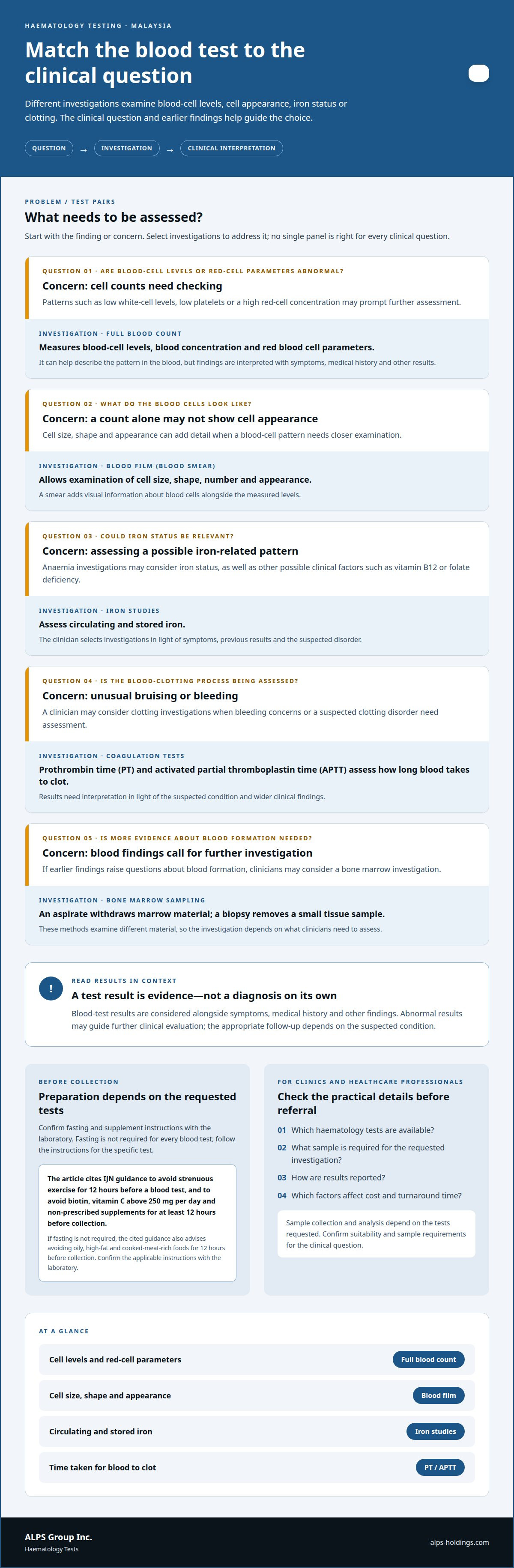
Preparation depends on the requested tests, so confirm fasting and supplement instructions with the laboratory before collection. Fasting isn’t required for every blood test. IJN advises avoiding strenuous exercise for 12 hours before a blood test. It also advises avoiding biotin, vitamin C above 250 mg per day and non-prescribed supplements for at least 12 hours before collection. If fasting isn’t required, IJN advises avoiding oily, high-fat and cooked-meat-rich foods for 12 hours before collection. Follow the laboratory’s instructions for your specific test.
Comparing Haematology Test Types
A full blood count measures different blood-cell levels, blood concentration and red blood cell parameters. A blood film, also called a blood smear, allows examination of cell size, shape, number and appearance. Coagulation tests, such as prothrombin time or activated partial thromboplastin time, assess how long blood takes to clot. These tests answer different questions: cell counts and appearance describe blood cells, while clotting tests assess the blood’s clot-forming process.
Tests Included in the Panel
There is no single test panel for every clinical question. Investigations can include a full blood count, blood film, iron studies and coagulation tests. Iron studies assess circulating and stored iron. A clinician selects tests based on symptoms, previous results and the suspected disorder. Abnormal cell counts, unusual bruising or bleeding can prompt further assessment. The tests requested determine the sample collection and analysis required.
Blood disorders can affect energy, immunity and long-term health. Red cells carry oxygen using haemoglobin; white cells help fight infection; platelets help form clots. Low white-cell levels are called leukopenia, while low platelet levels are called thrombocytopenia. Polycythaemia involves a high concentration of red cells. Treatment depends on the disorder and may include oral iron, vitamin B12 or folic acid, transfusions, anticoagulants, or treatment for blood cancers such as chemotherapy or bone marrow transplantation.
Before referring a patient, clinics can ask the laboratory which haematology tests are available, what samples are required, how results are reported, and which factors affect cost and turnaround time.
Anaemia, leukaemia, haemophilia and haemoglobin disorders
Blood disorders affect different blood cells or clotting processes. Anaemia involves low red-cell levels or haemoglobin. Thalassaemia is inherited and limits haemoglobin production. Sickle cell disease changes red-cell shape, giving the cells a crescent or sickle appearance. Each condition calls for different investigations, guided by the clinical question and initial findings.
For suspected anaemia, results can help distinguish reduced red cells from other blood abnormalities. Iron studies assess circulating and stored iron, while vitamin B12 and folate deficiencies may also be considered clinically. Thalassaemia and sickle cell disease are haemoglobin disorders, so assessment focuses on identifying the underlying pattern. An abnormal result informs further clinical evaluation rather than establishing every cause by itself.
Leukaemia affects blood-forming tissues and includes several distinct diseases, such as chronic myeloid leukaemia and chronic lymphocytic leukaemia. Myelodysplastic syndrome is another malignant haematological disease. Abnormal blood-cell findings can prompt further investigation, but diagnosis depends on clinical assessment and appropriate testing. A haematologist considers the findings alongside symptoms and medical history.
Haemophilia is a bleeding and clotting disorder. Prothrombin time and activated partial thromboplastin time tests measure how long blood takes to clot. Their results need to be interpreted in light of the suspected condition and wider clinical findings. Unusual bruising or abnormal bleeding may prompt assessment by a haematologist, particularly when a primary doctor recommends further investigation.
Symptoms vary by disorder. Anaemia may affect energy, while blood disorders can also affect immune function and long-term health. Low or high blood-cell counts, unusual bruising, or bleeding concerns help guide referral. A haematologist specialises in blood, blood-forming organs and related diseases. Early consultation can support timely diagnosis and help clinicians plan targeted care.
For Malaysian clinics and healthcare professionals, the practical next step is matching the suspected disorder with appropriate investigations and clinical review. Contact ALPS to discuss testing suitability for a specific diagnostic or referral question.
Diagnostic testing and investigations
Investigation depends on the clinical question and earlier findings. A blood sample may be sufficient, while some cases require a bone marrow examination.
Diagnostic Testing Options
Laboratory tests can assess blood-cell levels, cell appearance, iron status and clotting. If the findings raise questions about blood formation, bone marrow sampling may provide additional evidence. An aspirate withdraws marrow material for analysis; a biopsy removes a small tissue sample. Because these methods examine different material, the investigation depends on what clinicians need to assess.
The HPSF Muar handbook recommends aspirating approximately 0.3 mL of bone marrow for an aspirate. For an initial bone marrow biopsy, it recommends a sample greater than 1.5 cm, with 2-3 cm as the preferred length. These figures describe sample collection guidance, not a diagnosis. The investigation and specimen type should match the clinical question.
Test Risks and Limitations
Blood tests provide evidence about the cells or processes measured, but may not identify the underlying cause. Different conditions can produce similar abnormalities, so results need to be interpreted alongside symptoms, medical history and other findings. A blood sample does not show marrow structure directly; a marrow aspirate or biopsy examines different material.
For Malaysian clinical teams, interpretation starts with a clear referral question and relevant context. Include the reason for testing, pertinent symptoms and previous results with the request. The laboratory can process the specified investigation and report findings for clinical interpretation. If marrow sampling is being considered, clarify the sample type and intended analysis before collection. This helps align specimen handling with the investigation.
A result may lead to further evaluation rather than a final diagnosis. Clinicians weigh the pattern across investigations, including whether additional marrow analysis is appropriate. Contact ALPS to ask about testing suitability or availability.
Laboratory services and clinical support
A laboratory request links a clinical purpose to the relevant investigation. Test scope, referral arrangements and reporting needs shape the pathway.
Laboratory Services
Medical laboratory services include haematology, biochemistry, serology, immunology and microbial testing. The medical laboratory service is relevant when a healthcare team needs laboratory analysis. A clear request identifies the investigation and its purpose, helping the team consider what information is needed for interpretation.
For blood collection, IJN advises applying pressure to the puncture site for at least five minutes. For people taking blood-thinning medication, IJN advises applying pressure for ten minutes.
Referral and Prescription Requirements
Referral and prescription requirements vary across Malaysian testing pathways. They depend on the service arrangement and how the test is ordered. For clinically directed investigations, a referring clinician can define the question and provide relevant context, such as the reason for testing or previous findings.
Before arranging collection, establish who is requesting the test and who needs the report. For example, a clinic investigating an abnormal result can specify the clinical question and intended report recipient.
Results Timing and Delivery
Timing depends on the investigation, specimen processing and whether further analysis is required. A routine blood-cell assessment and a specialised investigation involve different laboratory work, so reporting timelines can vary. There is no single timeframe for every test.
Delivery arrangements depend on the service pathway. Establish the intended recipient and reporting channel when arranging testing, so results can be considered within the relevant clinical process. Interpretation should reflect the original question and associated clinical information.
For Malaysian healthcare teams planning laboratory testing, contact ALPS about your testing requirements.
ALPS Group Inc.: Haematology Tests
ALPS Group Inc. provides Haematology Tests for Malaysian clinics. These tests are relevant when blood-cell assessment is needed to support a clinical question. The appropriate test depends on the investigation requested and the information needed for interpretation.
ALPS Group Inc. also offers Whole Genome Sequencing, mRNA Testing, and Biochemistry, Serology & Immunology Tests. These are separate services, selected according to the purpose of the work, not substitutes for haematology investigations.
Clinics can contact ALPS Group Inc. to discuss the suitability of haematology testing for their requirements.
Turn the testing question into a clear next step
For Malaysian clinics and hospitals arranging haematology tests, connect the laboratory request to the clinical decision it needs to inform. A precise request helps align the investigation, specimen requirements and reporting pathway with the purpose of testing. Clarify who will interpret the findings and how the report will support ongoing assessment.
Before making a request, gather the relevant context, intended investigation and reporting needs. This supports a clear handover between your clinical team and the laboratory, while keeping interpretation within the appropriate clinical framework. Contact ALPS Group Inc. to discuss how its laboratory services relate to your requirements and the next steps for a suitable testing pathway.
Contact ALPS Group Inc. to discuss your needs, and take the next step with a clearly defined testing plan.
Frequently Asked Questions
How can haematology test results support a clinical assessment?
Laboratory findings should be considered alongside the reason for testing and the patient’s clinical history and examination. The requesting clinician can assess whether results fit the suspected condition and decide if further investigation or specialist review is appropriate. For example, persistent abnormalities across separate blood reports may warrant broader review than an isolated result. This puts each laboratory finding in the context of the patient’s overall health.
How can Malaysian healthcare organisations enquire about haematology testing?
Clinics, hospitals, healthcare professionals and research organisations can outline the investigation and its intended use when enquiring about testing. Requirements vary between services, so confirm the relevant arrangements with the laboratory. ALPS Group Inc. provides Haematology Tests for Malaysian clinics, hospitals, healthcare professionals and research organisations. Organisations considering testing can share their requirements to establish the relevant enquiry pathway.
What sample requirements should I confirm for a full blood count or other haematology tests?
Confirm the specimen type and collection instructions for each test, and ask whether fasting is required for the specific request. Clarify any guidance on regular medicines, supplements and collection timing before arranging collection. When several investigations are ordered together, preparation for one may not apply to the others. Follow the instructions for the specific tests rather than changing medication or diet independently.
How should healthcare professionals review haemoglobin, white blood cell and platelet results?
Results show whether measured values fall within the reporting laboratory’s reference intervals, but the overall pattern matters more than a single value. The requesting clinician can assess haemoglobin alongside other red-cell findings and review white-cell and platelet results in light of the clinical context and reason for testing. Reference intervals can vary by laboratory and patient context, so consider the report alongside clinical review rather than treating a flagged result as a diagnosis.


