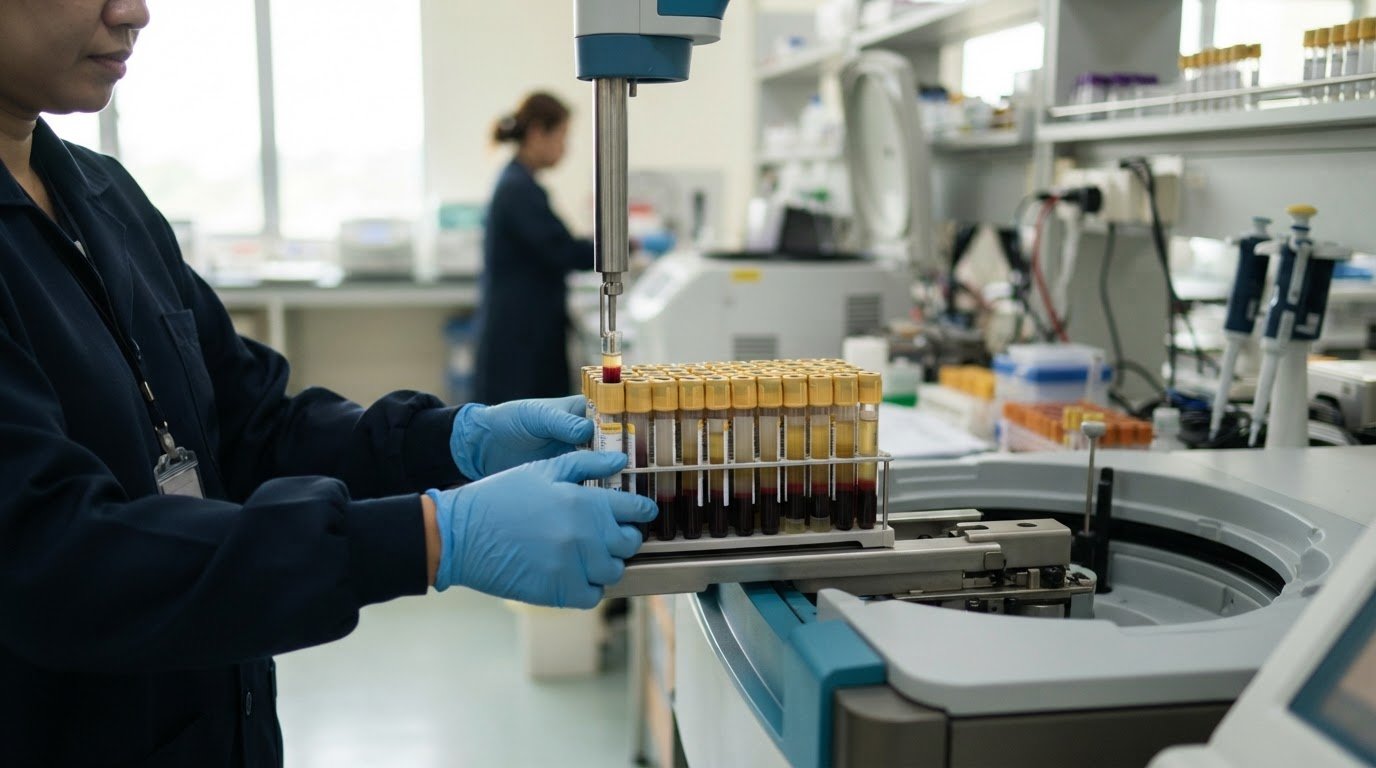

Product microbiological testing helps establish whether a product contains specified pathogens and how much viable microbial growth it carries. In Malaysia, microbial product testing can assess organisms such as Salmonella, E. coli and Listeria, alongside total plate count, which estimates the number of living microorganisms in a sample. These results support informed decisions about product quality and microbiological risk, but they do not by themselves guarantee that a product is safe in every circumstance.
Testing is most useful when the selected organisms and microbial measures match the product and the decision at hand. This article explains why pathogen detection and plate counts matter, what microbial tests may cover, and how laboratories approach sample handling and submission. It also outlines the practical details that can affect a testing request, including the product type, the question the analysis needs to answer and the information supplied with the sample.
Key Takeaways
- Ask which microbial tests are available for your sample and what each result can show.
- Discuss your testing needs with the laboratory to identify suitable tests for your sample.
- Prepare your submission details carefully, since product type, sample condition and handling affect the usefulness of laboratory analysis.
- When assessing a laboratory, distinguish its available tests from the specific methods and accreditation scope relevant to your sample.
Microbial testing
Microbial testing can help assess a sample for microorganisms, but the available analysis depends on the sample and requested scope. Before making a request, identify the sample type and the purpose of testing. This information helps the laboratory assess whether the requested analysis may be suitable.
Test methods and the microorganisms assessed vary according to the requested analysis. Ask the laboratory which tests are available for your sample, what the results will cover and how those results will be reported. A result applies to the sample and analysis performed; it should not be taken to cover organisms or characteristics outside that scope.
For samples such as food, cosmetics or pharmaceutical products, confirm whether testing is available for the specific product and intended purpose. The requested analysis and any relevant criteria may differ by product. Do not assume that a testing request for one type of sample is suitable for another.
Microbial testing requirements depend on the sample and the decision the result will inform. The analysis should be agreed with the laboratory before submitting a sample. A single testing request may not suit every sample type, so provide relevant product information when asking about the available scope.
The scope of laboratory work depends on the sample and requested analysis. Factors such as sample type and the testing requested help define the work. Discuss the proposed scope, sample requirements and any associated fees with the laboratory before arranging testing.
Testing and reporting time depend on the analysis requested. Ask the laboratory about the expected process and reporting for your sample. A clearly defined request helps establish whether the microbiology testing service may be suitable. Contact ALPS to check service availability, suitability or request a quotation.
Laboratory sample preparation and analysis
Microbial testing in Malaysia should be selected according to the sample and the question being assessed. A test of overall microbial load, for example, differs from an analysis targeting a particular microorganism. These results have different purposes, so interpret them in relation to the requested analysis rather than treating them as interchangeable measures of product quality.
Different microbiological methods provide different analytical approaches. The appropriate method depends on the analysis and material being assessed; no single technique represents every testing objective. Ask the laboratory which methods and analyses are available for your sample and testing request.
The scope of microbial testing depends on the product and testing request. Before submitting a sample, clarify what the analysis is intended to assess, what sample requirements apply, and what information the report will provide.
For instance, a request to assess a particular microbial concern differs from one seeking broader results. The selected analysis should reflect the material and the information the requester needs from the result. Confirm the available testing scope with the laboratory before arranging sample submission.
These distinctions help organisations frame a testing request and understand what the selected analysis can report. To discuss testing availability and suitability for a product or environmental sample, contact ALPS Group.
Sample submission requirements and quantities for microbial product testing
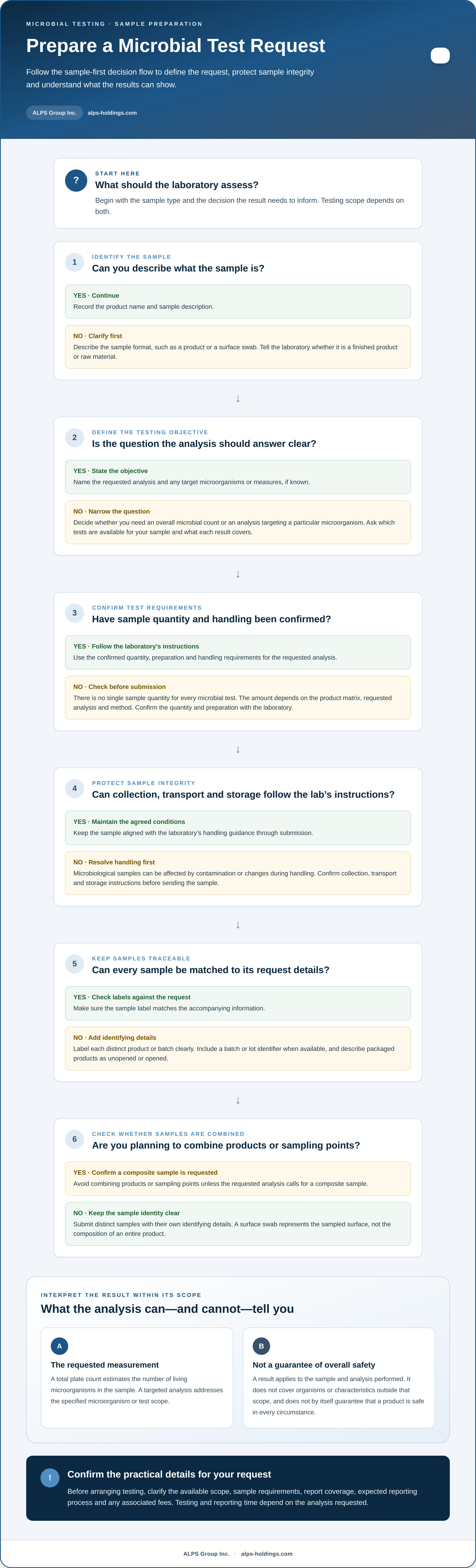
There is no single sample quantity that suits every microbial test. The amount depends on the product matrix, requested analysis and method. A solid food, liquid cosmetic and packaged product may require different preparation. Confirm the required quantity with the laboratory for the specific testing scope.
Before submission, provide the product name, sample description and testing objective. Include the target microorganisms or measures where known, such as an overall microbial count or a specified organism. State whether the sample is a finished product, raw material or surface swab. These details help the laboratory determine relevant preparation and analysis procedures.
Product identity also matters. Record the batch or lot identifier when available, and ensure the sample label matches the accompanying request information. For a packaged product, describe the packaging and whether it is unopened or has been opened. If submitting different products or batches, label each sample clearly so results can be linked to the correct material.
Collection, transport and storage should follow the laboratory’s instructions. Microbiological samples can be affected by contamination or changes during handling, so preserve sample integrity throughout the process. Avoid combining products or sampling points unless the requested analysis calls for a composite sample. A surface swab represents the sampled surface, not the composition of an entire product.
For a testing enquiry, provide the product type, sample format, requested analyses and number of distinct samples. The laboratory can then discuss the appropriate quantity and handling requirements for the proposed work. Clear information at submission helps align the sample with the intended analysis and supports interpretation of the report.
Which Malaysian laboratories are accredited for microbial product testing, and what are their SAMM accreditation scopes?
A laboratory offering microbial testing should not automatically be described as SAMM-accredited for every test it performs. Accreditation claims need to correspond to documented scope information for the relevant laboratory and test. Without that evidence, naming a laboratory or assigning accreditation to a microbial analysis would risk overstating its status.
When assessing a testing request, distinguish the laboratory’s general capabilities from the specific scope of the requested work. The product category and analysis matter: a scope for one material or method should not be assumed to cover another. Confirm the relevant requirements for the particular product test.
Distinguish a statement that a laboratory meets a standard from a claim that a particular test is accredited. The wording, issuing body and listed scope determine what the statement supports. A general quality or standards statement alone does not establish accreditation for microbial product testing or identify which organisms and methods are covered.
When evaluating a testing request, use precise language about the required organism, analysis and product type. This helps clarify whether the question concerns laboratory capability, an applicable standard or an accreditation claim. These are related considerations, but one does not establish the others. Reports and supporting scope documents should be interpreted only within their stated coverage.
No named Malaysian laboratory or specific microbial product test should be labelled SAMM-accredited without authoritative scope evidence. For a discussion of a product-testing request and its documentation needs, contact the laboratory team.
ALPS Group: mRNA Testing
ALPS Group provides Microbial Tests for organisations seeking laboratory analysis of microbial product samples. The service is relevant when a request concerns microbial presence or load; the product type and intended analysis help define the scope. mRNA Testing is a separate molecular testing offering, not a substitute for microbial product analysis. Keeping these purposes distinct helps healthcare providers and research organisations direct requests to the appropriate testing category.
For a microbial testing enquiry, describe the product and the analytical question, such as whether the request concerns microbial load or a specified microorganism. This context helps the laboratory discuss test suitability and sample requirements. Enquire separately about mRNA analysis if that is the testing need.
To discuss a testing request, contact ALPS Group.
Turn laboratory results into a clear next step
A well-defined request for microbial product testing in Malaysia starts with the decision the result must inform. Matching the testing objective to the product and intended use helps make findings more relevant to quality review, product development or internal assessment. It also gives the laboratory a clearer basis for discussing the work and reporting.
For organisations with broader research or laboratory needs, ALPS Group also offers Whole Genome Sequencing, mRNA Testing, and Biochemistry, Serology & Immunology Tests. Each serves a distinct testing purpose, so frame requests around the question being investigated rather than treating the analyses as interchangeable.
Prepare a concise enquiry describing your product, testing objective and any specific analytical requirements. This creates a practical starting point for discussing the next steps. Send a testing enquiry to ALPS Group to begin that conversation. A well-defined request can help your organisation move forward with greater clarity and confidence.
Frequently Asked Questions
Why Microbiological Testing?
Microbiological testing provides evidence about microbial presence or load to support informed decisions. For example, an organisation investigating a quality concern can consider test findings as part of its assessment. Testing can also support comparisons between samples. Results relate to the sample and analyses performed, so consider them alongside other relevant information and quality controls.
What microbial testing services are available in Malaysia?
ALPS Group Inc. offers Microbial Tests. Whether a particular sample and analysis are suitable should be confirmed with the laboratory. A useful enquiry identifies the sample category and the decision the results should support. These details help clarify the testing scope and submission requirements.
How is a microbial test selected?
Test selection depends on the sample and the question being investigated. Before submitting a sample, ask the laboratory which analyses may be suitable and whether they are available for that sample type. The requested analysis should reflect the purpose of testing and any relevant specification. A method used for one sample type should not automatically be assumed suitable for another.
How do businesses submit samples for microbial testing in Malaysia?
Start by describing the sample, its form and the analysis sought, then follow the laboratory’s submission instructions. Identify whether the sample is a finished product or raw material, and distinguish separate batches clearly. Do not assume one sample quantity or packaging approach fits every test. Following the laboratory’s directions helps align the submitted material with the requested analysis.
What are the risks of microbial contamination, failed tests, and product recalls in Malaysia?
Microbial contamination can affect product quality and prompt further investigation when a test result does not meet relevant criteria. A failed result is a signal to assess the affected sample and the surrounding quality process; it does not, by itself, establish the cause or determine a recall. Any product action should be based on applicable requirements, evidence and responsible quality procedures.
What should I ask about microbial testing methods?
Requirements depend on the sample and the purpose of testing. Ask the laboratory which method and criteria apply to your sample, and whether the requested analysis is available. Confirm any relevant submission requirements before sending material for testing.