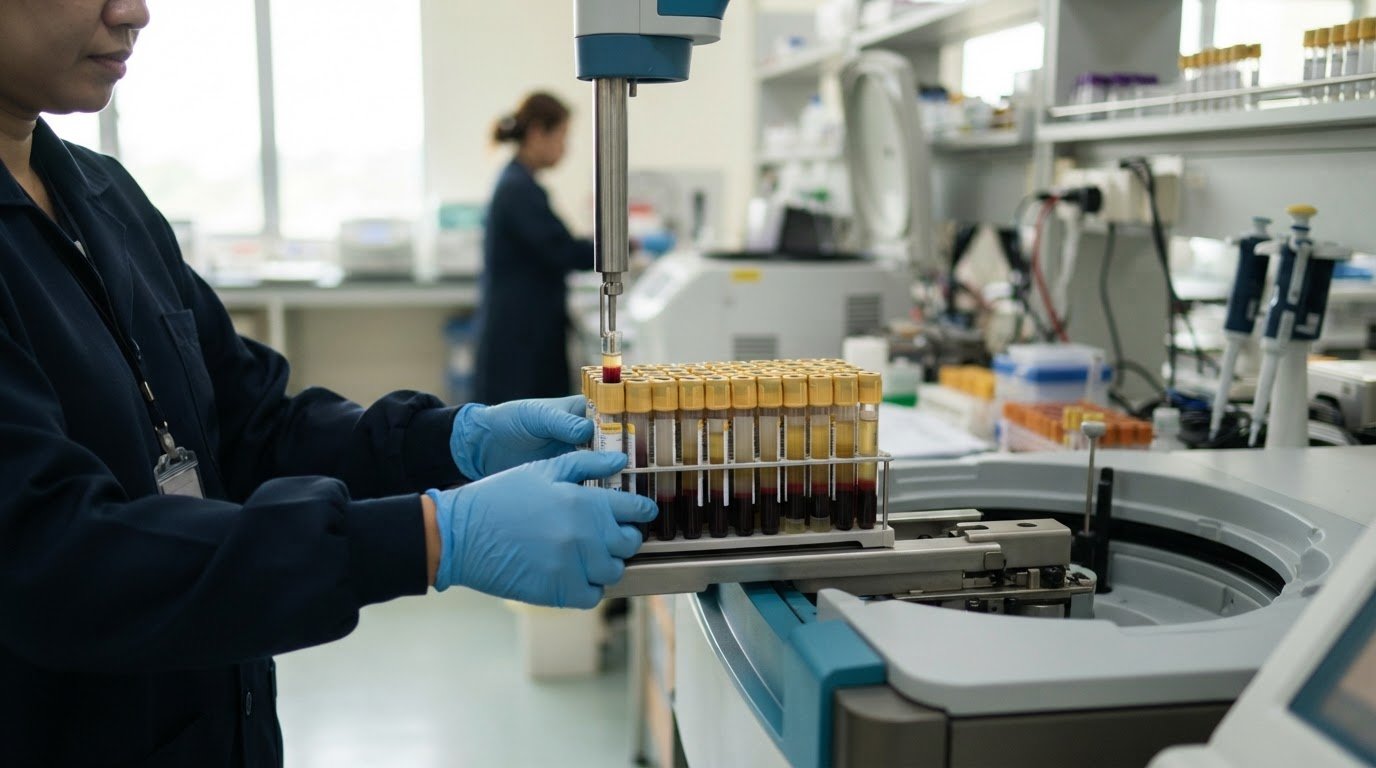

A food product can pass a final inspection and still carry a microbiological risk. Microbial testing for food and beverage products helps assess whether specified pathogens or spoilage organisms are present, supports quality evaluation, and provides evidence for monitoring products and production environments. It is one part of a wider food safety system, not a guarantee that every unit is free from contamination.
For Malaysian food and beverage producers, microbial testing results are useful only when the target, sample, and method fit the product and the decision at hand. This guide explains how presence-or-absence results differ from microbial counts, what findings can indicate about product quality and potential hazards, and how sampling during production and environmental monitoring can help reveal contamination patterns.
Key Takeaways
- Choose a laboratory test that fits the clinical or research question, such as microbial, haematology or biochemistry testing.
- Ask the laboratory what sample type and handling requirements apply before arranging testing.
- Confirm what the report includes and how results should be interpreted for the intended use.
- Check service availability, suitability, cost and turnaround time with the laboratory before submitting samples.
Why carry out microbiological testing on food and drink products?
Testing helps identify pathogens and spoilage organisms, supporting food safety and quality decisions. The organisms selected depend on the product, its formulation, and how it is handled and processed.
Foodborne Pathogens and Spoilage Organisms
Foodborne pathogens can cause illness, while spoilage organisms can change a product’s taste, texture, or quality. Salmonella is associated with poultry, eggs, and raw produce; Listeria monocytogenes can grow at refrigerated temperatures. Yeasts, moulds, and bacteria may also cause spoilage. Selecting relevant targets helps producers assess hazards and quality concerns in ingredients and finished products.
PCR Testing for Pathogens and Spoilage
Polymerase chain reaction (PCR) detects genetic material associated with target microorganisms. Testing can target pathogens such as Salmonella, Escherichia coli O157:H7, or Listeria monocytogenes, depending on the food matrix and testing objective. PCR can reduce microbiological testing turnaround times from days to hours. Results help distinguish targeted detection from broader assessments, while method suitability depends on the specific food matrix.
Beverage Microbiology and Spoilage
Beverage testing examines microorganisms that may affect safety, stability, or quality. Relevant organisms depend on the ingredients, formulation, processing, and packaging. A juice, for example, may require different targets from another beverage. Yeasts, moulds, and bacteria can contribute to spoilage and affect taste or appearance. Testing during production can help detect changes before final packaging.
Microbiological Limits and Standards in Malaysia
Microbiological limits are criteria used to assess whether a product’s results meet its applicable requirements; the relevant criteria depend on product type and target organism. For Malaysian products, testing should be interpreted against the requirements that apply to the specific food or beverage. The International Organization for Standardization identifies ISO 17025 as a standard laboratories use to support competence and impartiality in food and beverage microbiology testing.
Common tests include pathogen detection, such as Salmonella testing, and counts that measure viable microorganisms. Cost depends on the product matrix, target organisms, method, sample number, and reporting scope. PCR can reduce turnaround from days to hours, while timing depends on the selected method and testing requirements.
Pathogen identification and results interpretation
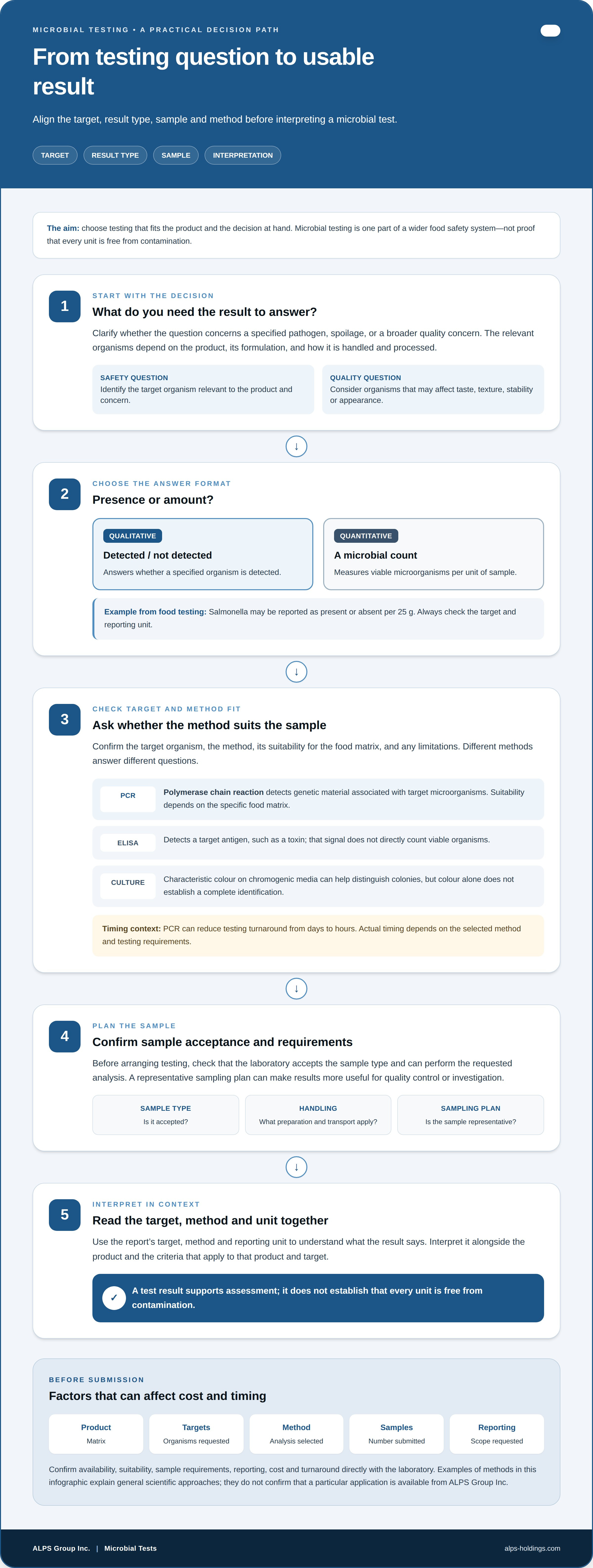
Start interpreting a laboratory result by identifying its target, method, and reporting unit. This context shows whether the finding indicates presence or measures microbial quantity, and helps relate the result to the question it must answer. The examples below explain general scientific methods and do not indicate that ALPS offers these specific applications.
Pathogenic Bacteria in Food and Beverages
As general scientific context, pathogenic bacteria can cause illness when present in food or drink. Campylobacter may be found in raw poultry and unpasteurised milk, while Staphylococcus aureus can produce a heat-stable toxin and is a concern in improperly handled foods. Identifying an organism can help assess a finding alongside the product, handling history, and potential consumer risk. Investigations vary according to how and where the food was produced.
ELISA Screening for Pathogens and Toxins
In general, ELISA, or enzyme-linked immunosorbent assay, detects and can quantify antigens such as bacterial surface proteins or toxins. It measures a target signal rather than directly counting viable organisms. For toxin screening, the result concerns the target antigen, not necessarily living bacteria. Interpretation should account for the assay target and food matrix. A toxin-focused result and a pathogen-presence result answer different questions.
Chromogenic Media for Pathogen Testing
Chromogenic media are culture materials that produce characteristic colour changes as certain microorganisms grow. These changes can help distinguish colonies with features associated with a target pathogen from other growth. Colour alone does not establish a complete result. The laboratory interprets it according to the method’s procedure and confirmation criteria; an observed colony is not identified solely by appearance.
Pathogen Detection and Quantification
In general, qualitative methods report whether a specified organism is detected; quantitative methods measure viable microorganisms per unit of sample. For example, food Salmonella testing may be reported as present or absent per 25 g. The reporting unit and target help explain what a result means. The method and applicable product criteria also inform follow-up decisions. A clear testing objective helps teams select useful analyses and interpret results in context.
For information about the availability or suitability of ALPS microbial testing, contact ALPS Group.
Discussing microbial testing for production samples
Organisations considering microbial testing for samples collected during processing, fermentation or packaging should first confirm that the laboratory accepts that sample type and can perform the requested analysis. A representative sampling plan can help make results more useful for quality control or investigation.
Planning microbial testing
Before submitting production samples, ask the laboratory which microbial tests are available and whether they are suitable for the product and the decision the result must support. For example, testing for a particular organism and investigating spoilage are different requests. Confirm the method, its suitability for the food matrix and any limitations before proceeding. Do not assume that rapid methods, validated methods or technological-strain fingerprinting are available; check service availability directly. These questions help clarify whether testing can support the intended production-control purpose.
Sample requirements and transport
Sample preparation and submission involve collecting a representative sample and protecting it from change or contamination before analysis. The selected method determines the required sample quantity, container, handling conditions and transport arrangements. Ask the laboratory what information to provide, such as the product name, formulation, production stage, lot identification and requested microbial targets, so it can assess the request.
Keep samples identifiable and securely closed, and avoid handling that could introduce organisms from other products or surfaces. For example, identify a sample taken during fermentation as an intermediate, not as finished product. Provide relevant processing or storage conditions, and agree submission details with the laboratory before sending samples. This can help clarify whether the sample is suitable and reduce avoidable uncertainty. Microbiology testing services relate these sample and method considerations to the analysis required; contact ALPS to confirm service availability and suitability.
Production environment monitoring
Environmental monitoring checks production areas for microorganisms that could reach food or drink. Unlike product testing, it focuses on surfaces, equipment, and air that may contribute to contamination.
A monitoring plan can include swabs from food-contact surfaces, drains, and processing equipment. These sites represent different potential routes of microbial spread: a conveyor belt contacts the product directly, while a drain can indicate conditions in the surrounding area. Sampling relevant locations helps build a clearer picture of where organisms may persist across the production environment.
Identify each environmental sample’s location and surface clearly so results remain meaningful. Recording whether a swab came from a filling line, preparation bench, or drain allows findings to be compared by site. Repeated detection in one area may point to a local source, while findings across several sites may suggest a wider process concern. The sampling plan should reflect the facility layout and production activities.
Environmental results can support an investigation, but their value depends on interpretation alongside site history and cleaning records. Finding the same microbial type on equipment and a nearby food-contact surface, for example, may help focus root-cause analysis. Fingerprinting microbial isolates by comparing distinguishing characteristics can support investigation of possible links and guide corrective actions in cleaning management.
Environmental monitoring also helps maintain traceability over time. Consistent sample locations and records help teams identify patterns, assess changes after corrective action, and inform quality decisions. Automation and digital monitoring tools can improve traceability and support real-time quality control in production environments. They can organise site information and results so teams can relate findings to their location and production context.
Discuss production environment testing and the sampling requirements for your facility.
ALPS Group: mRNA Testing
ALPS Group Inc. offers mRNA Testing and Microbial Tests as distinct laboratory services. The appropriate service depends on the testing objective and sample. Before making an enquiry, clarify the purpose of testing and provide available sample details so the laboratory can discuss service suitability.
mRNA Testing is a molecular testing offering, while Microbial Tests are a separate service. Do not assume either service covers a particular application without confirming it with the laboratory. Sharing the testing objective and sample information can help clarify service availability and reporting requirements.
To ask about service availability or suitability, contact ALPS Group.
Make testing part of informed decisions
For Malaysian research organisations exploring cancer vaccines, laboratory testing can support research decisions, but a test does not guarantee a diagnosis or treatment outcome. AI can help researchers analyse large genomic, proteomic, and clinical datasets to identify targets, engineer molecules, and design clinical trials. These developments may make cancer-vaccine research faster and more data-driven, but they do not establish that a vaccine will be effective.
ALPS Group offers Whole Genome Sequencing, mRNA Testing, Biochemistry, Serology & Immunology Tests, Haematology Tests, and Microbial Tests. The appropriate service depends on the research question and the laboratory’s confirmed capabilities; ask about sample requirements, reporting, cost factors, and turnaround time.
Contact ALPS Group about testing to discuss service availability, suitability, or a quotation.
Frequently Asked Questions
Why consider microbial testing?
Microbial testing can provide information about microorganisms in a sample. The appropriate test depends on the purpose of testing and the sample being assessed. Before requesting a test, clarify what information you need and whether the laboratory can assess that sample. Results can support research or other decisions, but their interpretation depends on the testing context and does not replace appropriate professional judgement.
Which microorganisms can be tested?
The microorganisms assessed depend on the test selected and the laboratory’s available capabilities. Do not assume that a particular organism or group is included in a microbial test. Ask the laboratory which targets are available, whether they are suitable for your sample, and what the reported result will show. ALPS Group offers microbial tests; contact the laboratory to confirm the availability and suitability of a specific test.
When should organisations request microbial testing?
Consider testing when you have a defined research or testing question that a microbial test may help address. Before arranging a test, confirm the sample type accepted, any collection or handling instructions, and the information needed to interpret the result. Requirements can vary by test, so check them with the laboratory in advance. Keeping clear records of the sample and its purpose can help when reviewing the findings.
What do microbial test results mean, and what should I do if a result is unexpected?
The result depends on the test performed and may be reported in different ways. Check the report for the test details and any limitations, and ask the laboratory to clarify information you do not understand. If a result is unexpected, review the sample information and discuss appropriate follow-up with relevant professionals. A result should be interpreted in context; it does not, on its own, establish every possible cause or outcome.
What can microbial testing tell me about a sample?
Microbial testing can provide information about the microorganisms assessed by the selected test. What the result means depends on the sample, the test’s targets, and the reason for testing. A test should not be assumed to detect every microorganism or establish the full significance of a finding. Discuss the intended use of the result with the laboratory and relevant professionals before making decisions based on it.
How long does microbial testing take in Malaysia?
Turnaround time depends on the selected test, sample requirements, and testing arrangements. Confirm the expected timing with ALPS Group when enquiring, as no general turnaround time applies to every microbial test.